Knowledge About Taxidermy
Taxidermy Human
Dec
Taxidermy Human
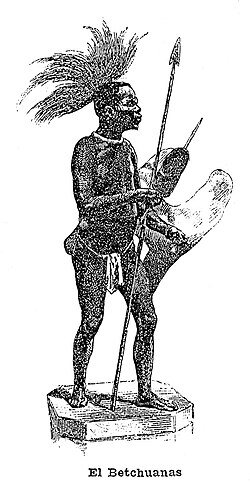
Taxidermy Human, The Negro of Banyoles (Catalan: negre de Banyoles, Spanish: negro de Banyoles or Bañolas) was a controversial taxidermy exhibit of a San individual, once a prominent attraction at the Darder Museum in Banyoles (Catalonia, Spain). The man’s remains were sent to Botswana for burial in 2000.
History | Taxidermy Human
The Verreaux brothers stuffed the body of a San individual in 1830. Teeth analysis indicates that the man was about 27 years old and had characteristics typical of the African bushman. The Darder Museum of Banyoles acquired it in 1916. The body was kept in the museum without any controversy until 29 October 1991. On this date, Alphonse Arcelin, a doctor of Haitian descent residing in Cambrils and serving as a PSC councillor there, penned a letter to Banyoles’ mayor, Joan Solana, requesting an end to the display of San’s remains. The press took notice of this request and published the story extensively.
In 1991, the first step towards the return of the “negre” to Botswana was taken when UNESCO’s then-secretary, Federico Mayor Zaragoza, met with Joan Solana. Later on, when Kofi Annan took on the role of Secretary-General of the United Nations, he showed interest in the matter and held discussions with Solana.
By then, the “negre” had gained such notoriety that references to the displayed San were commonly heard in diplomatic correspondence. Banyoles gained international recognition by hosting some of the events during the 1992 Summer Olympics. Several African governments demonstrated their backing for Arcelín, who had dispatched multiple letters to the media and various government leaders. This issue caused concern among various international museum associations, as it raised fears that human remains housed in museums might need to be returned to their original locations.
The UN and the Organization of African Unity held multiple discussions regarding the issue in 1997. Later that year, in March, the body was taken out of the Darder Museum. El Mundo characterized it as a relic. The removal caused discontent among many residents of Banyoles and its vicinity, as the San was regarded as “a member of the community.”
Return To Botswana
The government of Botswana proposed to assist the OAU in burying the man after all his remains had been brought back to the country. After the loincloth, feathered headdress, and spear were taken off in Banyoles in 2000, the body was sent to Madrid’s National Museum of Anthropology, where artificial components such as a wooden spine, eyes, hair, and genitals were removed. The skull and other bones were sent to Botswana in a box, arriving on 4 October. On 5 October, he was interred in Tsholofelo Park, Gaborone, and his gravesite was designated as a national monument.
Legacy
At present, the Darder Museum does not make any references to the controversy surrounding the Negre de Banyoles. In the museum, the San are represented solely by a silent video featuring black-and-white footage displayed on a small plasma screen. The video enables individuals to view the San as he was exhibited until his removal.
Numerous books have addressed the “el negre” controversy, particularly Frank Westerman’s work El Negro en ik (El Negro and me), which demonstrates that the naturalist Georges Cuvier was aware of the man. Westerman and the documentary El negre té nom (“The Negro Has a Name”) suggest that the individual in question was Chief Molawa VIII, who was born between 1800 and 1805 and died at approximately age 27; he was taken by the Verraux from Litakou (currently Dithakong in South Africa, not Botswana).

